
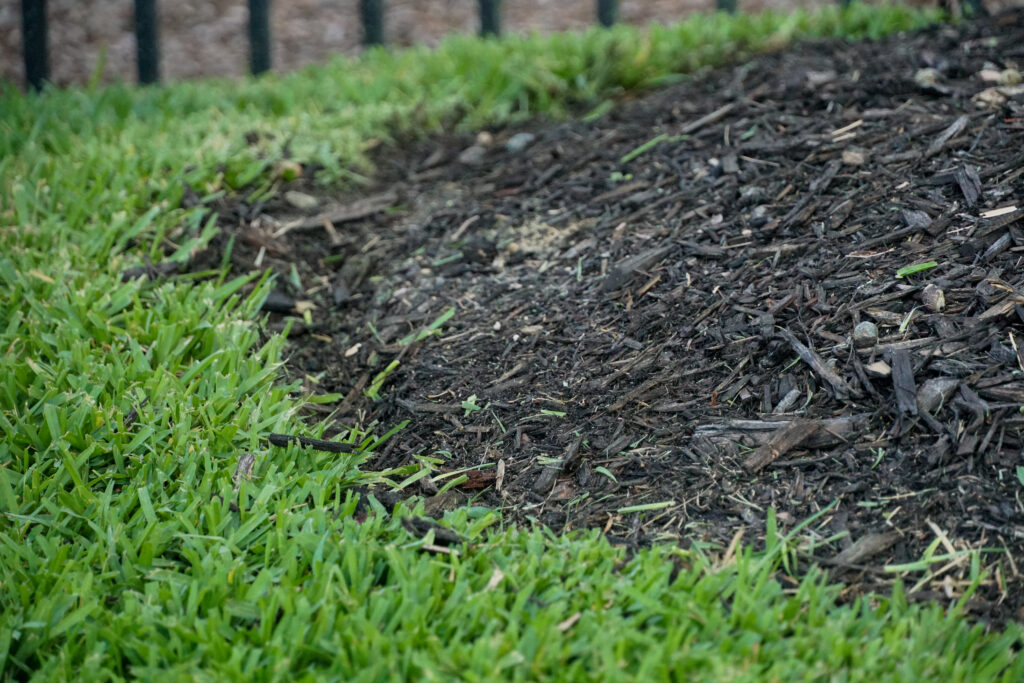
Fresh mulch can immediately make a landscape look cleaner, sharper, and more finished. But the value of mulch goes well beyond curb appeal.
In Central Florida, landscape beds face intense sunlight, high temperatures, heavy rain, fast-growing weeds, and soil conditions that can make it difficult to maintain consistent moisture around plants. A properly maintained layer of mulch creates a protective barrier between the soil and many of those everyday stresses.
That protection can help landscape beds retain moisture, regulate soil temperature, reduce weed pressure, limit erosion, and create better conditions around the roots of shrubs, flowers, trees, and other plants.
For homeowners and businesses in Ocala and Marion County, mulching is one of the simplest ways to improve the appearance of landscape beds while also helping protect the plants growing inside them.
Understanding what mulch actually does can make it easier to choose the right material, maintain the right amount, and recognize when your landscape beds are ready for a refresh.

Mulch Helps Landscape Beds Hold Moisture
Keeping consistent moisture around plants can be challenging in Central Florida, especially during stretches of intense heat and direct sunlight.
Bare soil is directly exposed to the sun and moving air, allowing moisture near the surface to evaporate more quickly. A layer of mulch covers that exposed soil and creates a barrier that helps slow moisture loss.
That can be particularly useful around shrubs, flowers, young trees, and other landscape plants with roots that depend on reliable access to water.
Mulch does not eliminate the need for proper watering, and too much water can create its own problems. Instead, mulch helps the soil make better use of the moisture it receives from irrigation and rainfall.
This matters in Ocala because local landscapes often have to contend with sandy soil that drains quickly. When soil has difficulty retaining moisture, reducing unnecessary evaporation becomes even more valuable.
By helping the soil remain consistently moist for longer periods, mulch creates a more stable environment around plant roots and can reduce some of the stress caused by Florida’s hot, sunny conditions.
Mulch Protects Roots From Florida Heat
Florida sunshine does more than dry out exposed soil. It can also cause surface temperatures to climb significantly during the hottest parts of the day.
Plant roots generally perform better when they are not repeatedly exposed to dramatic temperature swings. Mulch helps insulate the soil, reducing some of the direct heating caused by intense sunlight and creating a more stable environment underneath the surface.
Think of mulch as a protective layer between the Florida sun and the root zone below.
That protection becomes especially useful during Central Florida summers, when high temperatures can place additional stress on plants throughout the landscape. Plants growing in exposed beds may have to contend with both rapidly drying soil and elevated soil temperatures at the same time.
A properly mulched landscape bed can help address both challenges.
This does not mean piling mulch as deeply as possible. Excessive mulch can create moisture and plant-health problems of its own. The goal is an appropriate, evenly distributed layer that covers exposed soil without being piled against plant stems or tree trunks.
When installed correctly, mulch helps create a more forgiving environment beneath the surface even when summer conditions above ground become demanding.
Mulch Helps Keep Weeds Under Control
Weeds compete with landscape plants for water, nutrients, sunlight, and growing space. In Florida’s long growing season, they can also seem to appear almost as quickly as they are removed.
Mulch provides another layer of defense.
A consistent mulch layer helps block sunlight from reaching many weed seeds near the soil surface, making it more difficult for them to germinate and establish themselves.
Mulch will not make a landscape completely weed-free. Seeds can still arrive from surrounding areas, and persistent weeds may eventually find their way through. However, reducing the number of weeds that successfully establish themselves can make landscape beds considerably easier to maintain.
That means less time pulling weeds and less competition around the plants you actually want growing in the bed.
Keeping mulch refreshed is important because the layer gradually thins and breaks down. As bare soil begins appearing again, weeds gain more opportunities to take hold.
Combining fresh mulch with regular landscape maintenance creates a cleaner bed while helping prevent weeds from dominating the space between shrubs, flowers, trees, and other plantings.

Mulch Helps Reduce Soil Erosion During Heavy Rain
Florida rain can arrive quickly and intensely.
When heavy rainfall strikes exposed soil, water can displace loose material, create runoff, wash soil away from plants, and gradually change the shape of landscape beds. Sloped areas can be particularly vulnerable because moving water naturally carries loose soil downhill.
Mulch helps soften the impact of rainfall before it reaches the soil underneath.
Instead of raindrops repeatedly striking bare soil directly, the mulch layer absorbs and disperses some of that impact. It can also help slow water moving across the surface, giving moisture more opportunity to enter the soil instead of immediately carrying loose material away.
Certain mulch materials may work particularly well in areas where erosion is a recurring concern. Natural hardwood mulch, for example, becomes more compressed over time and can be useful in beds on slopes or in wetter areas.
Protecting soil matters because landscape beds depend on that soil to support plant roots and retain moisture and nutrients.
After periods of heavy rain or severe weather, homeowners should inspect their beds for washed-out areas, exposed soil, displaced mulch, and other signs that the protective layer needs attention.
Organic Mulch Can Support the Soil as It Breaks Down
Organic mulch does not remain unchanged forever, and that can actually be part of its value.
Materials such as hardwood mulch gradually decompose as they sit in the landscape. Over time, that organic material becomes incorporated into the upper layers of the soil.
This natural breakdown is one reason mulch needs to be refreshed periodically, but it can also contribute organic matter to the landscape bed.
Soil quality is especially important in Central Florida, where naturally sandy conditions can make moisture and nutrient management more challenging. Improving the environment around plants is an ongoing process rather than something completed during the initial landscape installation.
Different mulch materials break down at different rates. Dyed hardwood mulch can retain its appearance longer, while natural hardwood provides a traditional option that gradually decomposes. Pine straw offers another natural material that breaks down over time and is easy to distribute around plantings.
There is no single mulch that is automatically right for every property.
The best option depends on the plants, appearance you want, conditions within the bed, maintenance expectations, and how frequently you are comfortable refreshing the material.
Fresh Mulch Gives Landscape Beds a Finished Look
The protective benefits of mulch are important, but appearance is still one of the biggest reasons homeowners choose to refresh their beds.
Fresh mulch creates contrast between lawns, plants, walkways, and other landscape features. It covers exposed soil, creates a more consistent background around plantings, and can make an established landscape look noticeably cleaner without requiring a complete redesign.
Defined edges make that improvement even more noticeable.
When landscape beds have clean borders and fresh mulch, the transition between turf and planted areas becomes much sharper. Shrubs, flowers, and decorative plants stand out instead of blending into exposed soil and scattered weeds.
Homeowners can also use mulch color and texture as part of the overall landscape design. The right choice can complement the exterior of the home, surrounding plants, decorative rock, and other features throughout the property.
For commercial properties, these details contribute to the first impression customers, tenants, and visitors receive when they arrive.
Mulching is therefore one of the rare landscape improvements that can provide both immediate visual impact and practical protection underneath the surface.
Protect Your Ocala Landscape With Professional Mulching
Mulch may look like a finishing touch, but it performs important work throughout your landscape beds.
The right mulch can help conserve soil moisture, protect roots from extreme surface temperatures, reduce weed growth, limit erosion, support the soil as organic materials break down, and create the clean appearance that makes landscaping feel complete.
Getting those benefits requires more than simply dumping mulch into a bed.
The type of mulch, existing conditions, depth, placement around plants, bed edges, and long-term maintenance all influence the finished result.
Keith’s Lawn Care provides professional mulching and landscaping services for residential and commercial properties throughout Ocala and Marion County. The team works with multiple mulch options, including dyed hardwood, natural hardwood, and pine straw, and can help determine an appropriate option for the needs and appearance of your landscape.
Whether your existing beds have thinned out, weeds are becoming more noticeable, or you simply want to give your property a cleaner and more finished appearance, refreshing your mulch can provide both immediate and long-term benefits.
Protect the landscape you already have while giving it a fresh new look.